Article Detail
Beranda Landing Page yang Mengubah Klik Jadi Pelanggan
.png)
Recent Post



Blog Tags
- website, web performance, core web vitals, ux, ui, information architecture, cta, conversion, forms, social proof, security, https, ga4, tag manager, seo, cdn, mobile-first, trust, e-commerce, usability, page speed
- short form video, reels, tiktok, youtube shorts, content pillars, content strategy, analytics, retention, completion rate, saves, shares, creator ops, consistency, marketing
- digital hygiene, keamanan, backup, restore test, access management, 2FA, password manager, kolaborasi, cloud storage, sop, produktivitas, tim kecil
- landing page, hero, benefit, faq, social proof, copy, cta, ab testing, analytics, web performance, mobile first
- search intent, content hub, internal link, onpage, meta, gmb, nap, https, mobile, sitemap, robots, backlinks, search console
- product photo, packshot, lifestyle, lighting, white balance, macro, crop, preset
Landing Page yang Mengubah Klik Jadi Pelanggan
Landing page adalah “ruang pertemuan” pertama antara janji iklan dan realita yang Anda tawarkan. Dalam beberapa detik, pengunjung memutuskan: lanjut atau pergi. Supaya keputusan itu berpihak pada Anda, halaman perlu tujuan tunggal yang jelas, pesan yang mudah dipahami, dan sinyal tepercaya yang membuat orang nyaman melangkah.
Untuk mewujudkannya tanpa drama, mari kita susun langkahnya secara runtut, mulai dari pesan inti, struktur blok, hingga cara mengukur yang sederhana, sebelum Anda mulai menguji dan menyempurnakan.
1) Tentukan satu tujuan, satu audiens, satu pesan utama
Mulai dari pertanyaan sederhana: siapa yang ingin Anda ajak bicara, satu masalah apa yang Anda selesaikan, dan aksi apa yang ingin Anda terjadi (CTA). Hindari serba “semua orang” dan “semua fitur”—pilih satu kasus penggunaan paling kuat sebagai jangkar pesan.
2) Struktur yang membuat orang paham dalam 5 detik
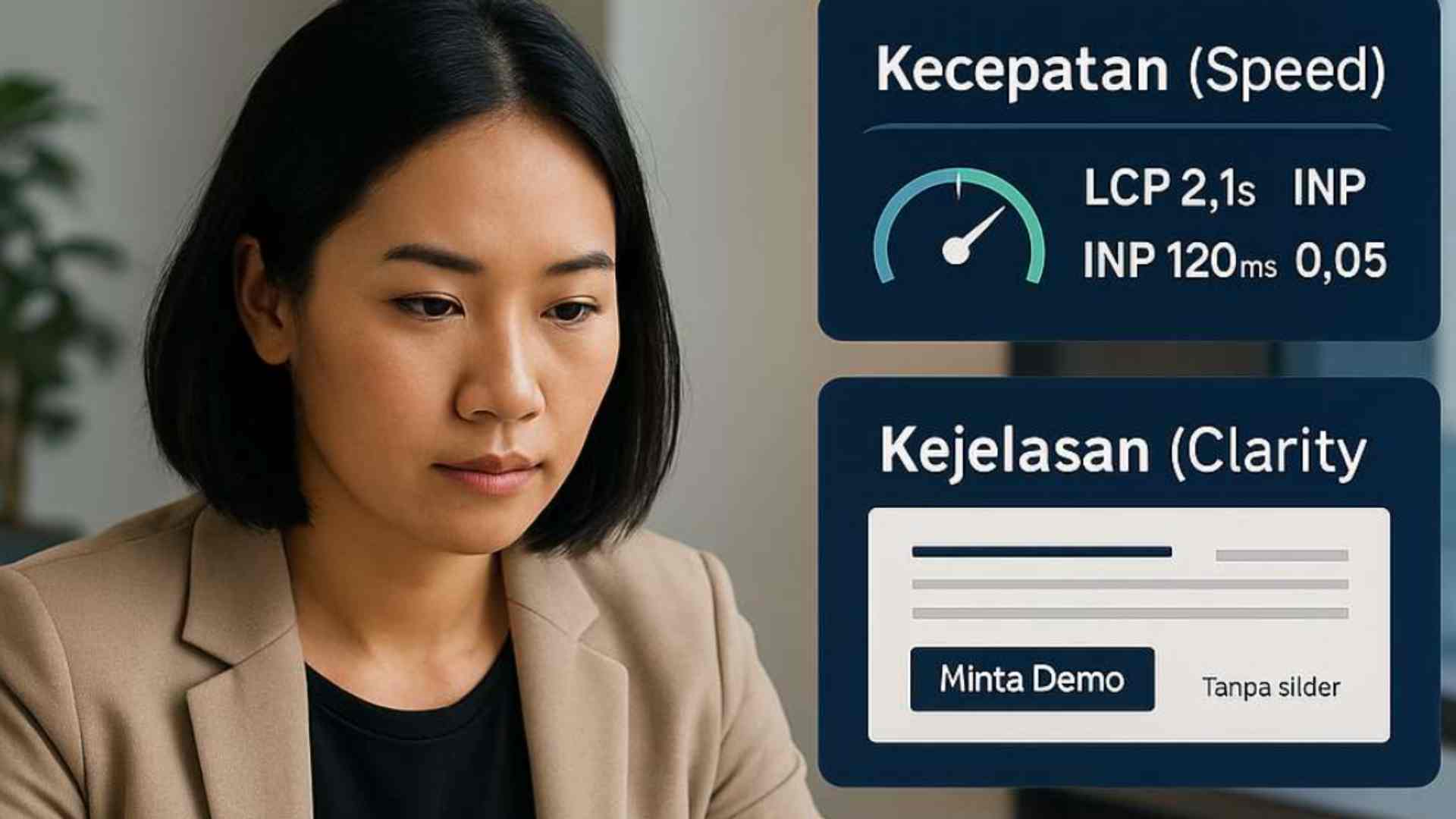
Blok utamanya: Hero (headline spesifik + subheadline nilai + satu CTA), Benefit ringkas (3–5 poin bernilai nyata), Bagaimana cara kerjanya (3 langkah sederhana), Bukti sosial (logo klien, testimoni pendek, ringkasan studi kasus), FAQ (5–7 keberatan umum), dan CTA penutup. Buang slider otomatis, atur hierarki visual, dan beri ruang napas di setiap blok agar mata mudah mengikuti alur.
3) Copy yang jernih dan terasa manusia
Tulis seperti berbicara pada satu orang. Gunakan kata “Anda”, angka spesifik, dan microcopy yang menenangkan di sekitar tombol dan form (contoh: “Tidak perlu kartu kredit”, “Dapat dibatalkan kapan saja”). Hindari jargon; jelaskan manfaat sebelum fitur.
4) Desain yang mengarahkan, bukan mengalihkan
Gunakan kontras warna untuk menonjolkan CTA, tipografi yang terbaca nyaman di ponsel, dan pola baca yang familier (Z/F-pattern). Visual dukung pesan—mockup, diagram sederhana, atau foto konteks—bukan dekorasi yang membuat fokus terpecah.
5) Form yang ringan dan mengalir
Minta data secukupnya. Validasi tampil langsung di tempat (inline), isi yang sudah benar jangan dihapus saat ada error, dan pertimbangkan progressive reveal jika pertanyaannya banyak. Setelah kirim, tampilkan konfirmasi yang meyakinkan plus tindak lanjut otomatis (email/WA).
6) Kecepatan yang terasa
Optimalkan gambar (WebP/AVIF), tunda skrip yang tidak penting, dan pakai CDN. Target realistis di ponsel yaitu LCP < 2,5 dtk, INP < 200 ms, CLS < 0,1. Halaman yang sigap terasa lebih premium dan membuat orang bertahan lebih lama melihat website Anda.
7) Eksperimen yang rapi
Uji hal besar dulu seperti headline, CTA utama dengan alternatif, atau urutan blok. Tulis hipotesis, jalankan A/B minimal satu siklus data yang layak, lalu catat keputusan (keep/kill/iterate). Satu eksperimen bermakna lebih baik daripada sepuluh yang setengah matang.
8) Pengukuran yang cukup untuk keputusan
Tandai event inti: view, click CTA, start form, submit, dan thank-you. Lihat drop-off per langkah, CTR CTA, dan pertanyaan FAQ paling sering. Jadwalkan review cepat mingguan untuk aksi kecil yang konsisten.
Landing page yang bekerja tidak berusaha bicara segalanya. Ia memilih satu pesan yang kuat, menampilkan bukti di saat yang tepat, dan memudahkan orang melangkah. Saat halaman terasa jelas, cepat, dan tepercaya, klik berubah jadi percakapan, dan percakapan berubah jadi penjualan.
GDV (Global Digital Verse) menyediakan Landing Page dengan riset singkat, copy & desain yang fokus pada tujuan, implementasi ringan, plus setup analitik. Hasilnya halaman yang siap dipakai utnuk iklan dan benar-benar membawa percakapan baru.